 Albuquerque Swamp Cooler Repair
 Fall Swamp Cooler Shutdown and Winterization in Albuquerque
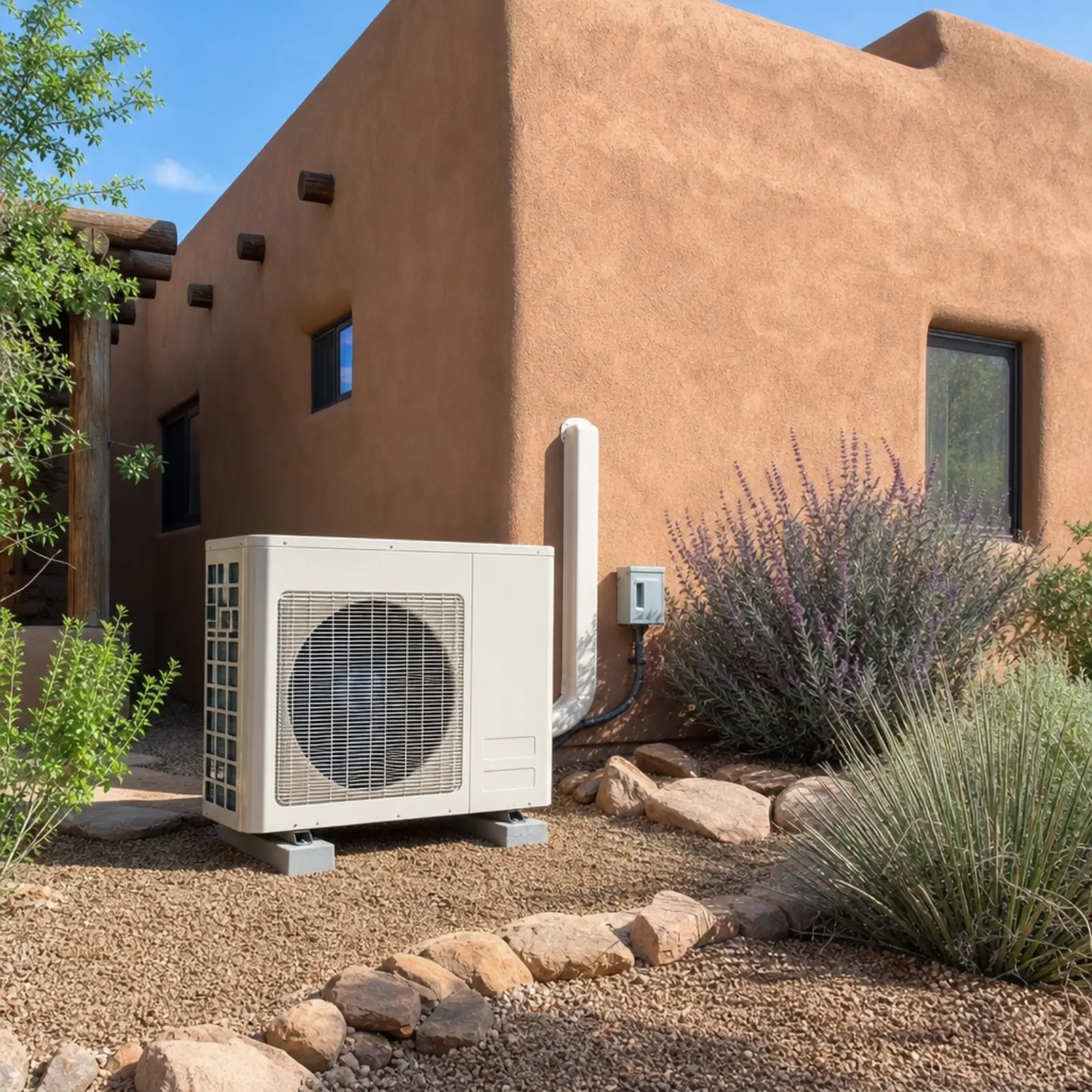
A fall swamp cooler shutdown in Albuquerque costs $100 to $200 and it is the visit that prevents the most common spring repair in the metro: the split water line. The water is shut off, the line and pan drained, the pads pulled or dried, the unit covered, and the down-duct damper sealed. On the valley floor it needs to happen by mid-October; in the Heights, by the end of the month.
Nobody enjoys paying to turn something off. The economics are still simple. A shutdown is $100 to $200. A split line, a rusted pan, and a dead pump discovered in April are several hundred dollars and a week without cooling in the first hot spell.
The freeze dates, by neighborhood
The National Weather Service office in Albuquerque publishes average first fall freeze dates by station, and they spread across nearly three weeks:
| Station | Average first 32 degree freeze | Average first 28 degree freeze |
|---|---|---|
| Corrales | October 17 | October 27 |
| Los Lunas | October 21 | October 31 |
| Albuquerque Foothills | October 23 | November 3 |
| Albuquerque South Valley | October 24 | November 2 |
| Albuquerque Sunport | November 3 | November 15 |
The Sunport’s earliest freeze on record was September 18, 1912. The NWS explains the spread: on calm, clear nights cold air pools on the valley floor, which can run 10 degrees or more colder than the Sunport, while the Sunport itself is usually a few degrees warmer than the foothills. A cooler in Corrales or the South Valley is living on a different calendar than one in Bear Canyon.
The practical rule: drain valley-floor coolers by the second week of October, foothills and Heights coolers by the last week, and if a hard freeze is forecast early anywhere, drain that night. Draining takes ten minutes and can be reversed. A split copper line cannot.
What the shutdown covers
- Water off at the shutoff. The valve at the hose bib or the saddle tap on the supply line. If the shutoff does not hold, that gets fixed now, because it is the valve you will need in an emergency next summer.
- Line drained. The union at the cooler is opened and the quarter-inch line up the wall is drained and blown clear. Water left in that line is the split you find in April.
- Pan drained and dried. Drain plug pulled, sediment and scale scooped out. A pan that sits wet for five months rusts, and on Albuquerque water at about 8.2 grains per gallon (third-party compilations of the Water Authority’s 2024 zone reports) the crust that forms in a wet pan is what kills next year’s pump.
- Pads pulled or dried. Aspen pads come out; they are done anyway. Rigid media is dried and either stored or left dry in the unit. Wet pads under a cover grow mold and produce the swamp smell at start-up.
- Pump and float checked. A pump that struggled in August is noted now, so the start-up visit brings the right one.
- Cover on. A fitted cover keeps snow, leaves, and roof grit out of the pan and blower.
- Damper sealed. The down-duct damper or the ceiling register cover is closed and sealed so the cooler is not a hole in the roof all winter. In a house with both cooler and refrigerated air, this is the single biggest energy leak in the building.
Why the valley is different
The North Valley and South Valley sit lower than the rest of the city, at 4,994 and 4,928 feet against a civic elevation of 5,312, and the cold air that drains off the mesas at night pools there. That is why Corrales’ growing season is 161 days against 210 at the Sunport, and why the side-draft cooler on a 1940s adobe in Los Padillas needs draining two weeks before the roof unit on a 1975 house in Highlands North. Elevation cuts the other way in Placitas, at 5,955 feet: cold from altitude rather than pooling, but cold early either way.
The split water line, in detail
Copper and poly lines up an exterior wall have no protection. Water in the line freezes, expands, and splits the pipe or blows the compression fitting. Nothing leaks in January because everything is frozen and the water is off at the cooler end. In April someone opens the valve and the wall runs with water, or worse, the split is inside the wall and the drywall finds it first. Repair is done with the start-up visit, but the pan usually rusted while it sat wet and the pump usually seized in the crust, so the April bill is three parts, not one. The shutdown is $100 to $200. That is the whole argument.
Landlords
Albuquerque’s 2025 amendment to the Uniform Housing Code (O-24-59) requires every dwelling unit to be provided with cooling facilities, and it names evaporative coolers first among the acceptable permanently attached fixtures. A landlord with coolers on several roofs who skips the fall shutdown is buying spring repairs on every one of them in the same week tenants start calling. A shutdown round in October and a start-up round in April is the cheap way to stay ahead of that ordinance.
Package it
The shutdown is usually bundled with the spring start-up at $120 to $250, and when we do both, it means the pump that was weak in October gets replaced in April without a second diagnosis. Ask for the package price when you book. The full pricing table has every number.
Book the shutdown in early October for the valley and by mid-October for the Heights. Send a photo of the cooler and the roof access and you get a time. We cover Albuquerque and out to Rio Rancho, Bernalillo, and Belen. Timing questions are on the FAQ, and the full October checklist is in the freeze-prep post.
Frequently Asked Questions
How much does swamp cooler winterization cost in Albuquerque?
$100 to $200 for the full shutdown: water shut off, line and pan drained, pads pulled or dried, unit covered, and the down-duct damper sealed. It is often packaged with the spring start-up at $120 to $250. It is the cheapest visit in the trade and it prevents the most expensive spring repair.
When is the first freeze in Albuquerque?
It depends on where you live. The National Weather Service puts the average first 32 degree freeze at November 3 at the Sunport, but October 17 in Corrales, October 21 in Los Lunas, October 23 in the foothills, and October 24 in the South Valley. The earliest on record at the Sunport was September 18, 1912. Valley-floor coolers should be drained by mid-October.
What happens if I do not winterize my cooler?
The quarter-inch water line up the wall freezes and splits, and you find out in April when the roof floods. The pan holds water all winter and rusts, wet pads grow mold, and the open damper leaks heated air out of the house for five months. A skipped shutdown is the most common cause of spring repairs.
Can I just shut the water off and leave it?
Shutting the water off is the important step, but the line still holds water unless you open the union at the cooler and let it drain, and the pan still holds water unless you pull the drain plug. Pads left wet in a covered cooler are where the spring smell comes from. Ten more minutes finishes the job properly.
Do I need to seal the damper if the house has refrigerated air too?
Yes, more than anyone. In a house with both systems, an unsealed cooler damper is a hole in the duct that leaks heated air all winter and refrigerated air all summer. Sealing it at shutdown and opening it at start-up is part of both visits.
Can the cooler shutdown and the furnace start-up be one visit?
Many Albuquerque households book them together as one fall changeover, and the order matters: the cooler damper should be sealed before the furnace runs, or the first warm air goes up the duct and out through the cooler. Say you want both when you call. The furnace half is a different trade, because gas furnace work is regulated heating work in New Mexico, so ask whoever does it whether they are licensed for gas appliances. If we are not the ones checking the furnace, book that check separately before the first cold night.
More swampcooler services
Areas we serve
- Albuquerque, NM
- Edgewood
- Los Ranchos
- North Valley
- South Valley
- Swamp Cooler Repair in Belen, New Mexico
- Swamp Cooler Repair in Bernalillo, New Mexico
- Swamp Cooler Repair in Corrales, New Mexico
- Swamp Cooler Repair in Los Lunas, New Mexico
- Swamp Cooler Repair in Placitas, New Mexico
- Swamp Cooler Repair in Rio Rancho, New Mexico
- Tijeras